Create a Traditional Scottish Wedding
Highland wear is a key part of scottish weddings and embracing scottish heritage and history. Scottish traditions and dress is celebrated everywhere in and out with of Scotland by people of all backgrounds & demographics. Most highland wear and other scottish traditions date back centuries and there is multiple ways people can incorporate and build a scottish wedding from subtle to maximal ways.
Tartan has been used for uniting and celebrating families for generations and is much easier to incorporate into weddings than most expect. This blog explores creating a traditional scottish wedding.
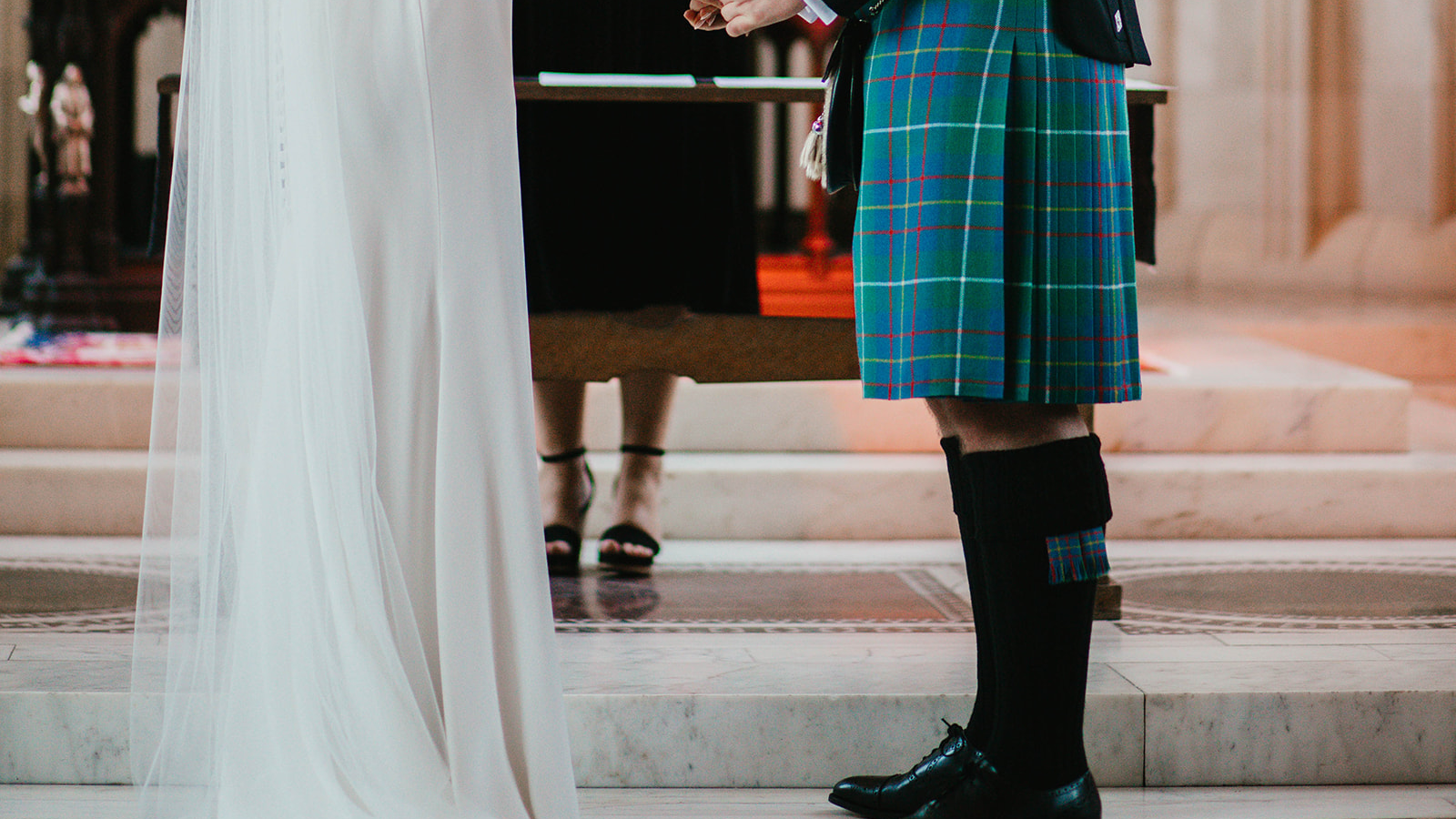
Kilt or suit for the groom? –

A controversial debate for some but an easy decision for most Scots and tartan enthusiasts. Suits are most commonly seen around the world but in modern times the kilt outfit is becoming the fan favourite not only for Scotland but for countries around the world.
The suit is a classic and is very smart looking, but the kilt is much more customisable than people imagine. Wedding kilts can be dressed down & subtle or can be styled up to be super formal & maximalist. The versatility of kilts is what’s contributed to their global appeal.
We definitely think kilts are the way to go but we might be slightly biased but its 100% worth considering. There is thousands of tartans to choice from of family names, patterns & colours. Alongside a wider variation of jacket colours, styles and traditional accessories to create a smart clean look that’s completely personalised to you and your own style & your occasion.
Why do people wear kilts to weddings –
Not only are kilts way more versatile than the boring old suit but they are a great way of representing peoples own personality & style. Many opt for a kilt to connect or embrace their own personal connection to scottish heritage and wear a kilt outfit as a symbol of their ancestry & identity.
Kilts are a key piece of scottish identity and history & our national dress and is the most commonly seen form of formal wear seen across scottish culture. Despite such a global appeal, the kilt was one banned during the 17th century during a phase called the dress act of 1746 which lasted over 30 years. The dress act forbid any Scots or non military members from wearing any form of kilt in attempt to suppress scottish nationalism & representation. Many Scots wear their kilts now in honour of those who fought for our right to the kilt and celebrate our national dress.
Tying tartan into your wedding décor & colour palette –
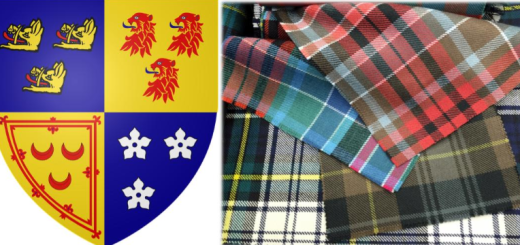
Usually when people are selecting a tartan for their kilt it usually is based on 3 possible factors, the first being wearing a family tartan, either by selecting a tartan associated with their family name or clan derivative or even the new name they are joining with. The second most common selection is most couples will have already selected their wedding colour palette & bring it to us and select a tartan that compliments it to keep the wedding cohesive and lastly some just opt for a tartan they simply like the look of.
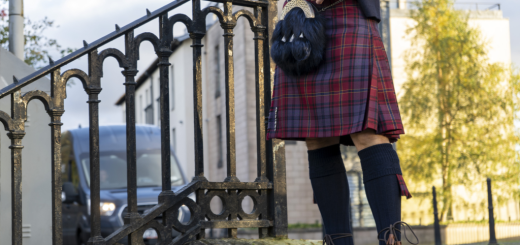
Usually for those looking to incorporate tartan into their wedding this is most common do this by dressing the groom & wedding party in kilts. The groom often having his a little different to stand out this could be with a different tartan or tie or sporran or by wearing a shoulder plaid.
You can also bring in tartan via small details like ribbon in the brides hair or around bouquets, small touches like table runners, hankies or alongside table centrepieces. tartan can also be worn in the form of a leg garter, shawls, dog accessories, sashes or on accessories like ring cushions & hip flasks just to name a few.
Hand fasting –
Hand fasting involves a long strip of tartan, During the ceremony, the couple’s hands are tied together with a cord or ribbon, symbolizing their connection and commitment. This act is where the term “tying the knot” originates. The couple often exchanges vows and receives blessings while their hands are bound.

The Scottish tradition of hand-fasting dates back to medieval times and is believed to have originated from Celtic and Pagan rituals. Gaelic scholar Martin Martin describes hand-fasting as an ancient custom in the Isles where “a man would take a maid as his wife for the space of a year without marrying her, and if she pleased him all the while, he married her at the end of the year and legitimised her children, and if he didn’t love her, he returned her to her parents.” This isn’t exactly the stuff of Hollywood rom-coms!
By the 18th century, the Church of Scotland no longer recognized unions formed solely by consent and consummation, even though civil authorities did. To circumvent this, ceremonies were performed publicly. However, this practice ended in 1939 when Scottish marriage laws were reformed, and hand-fasting was no longer recognized.
Modern interpretations of hand-fasting emphasize love and the binding of two souls. This tradition has seen a revival as more couples seek to personalize their weddings and make them unique. It was also featured in the Stark wedding in Game of Thrones, further romanticizing this ancient practice.
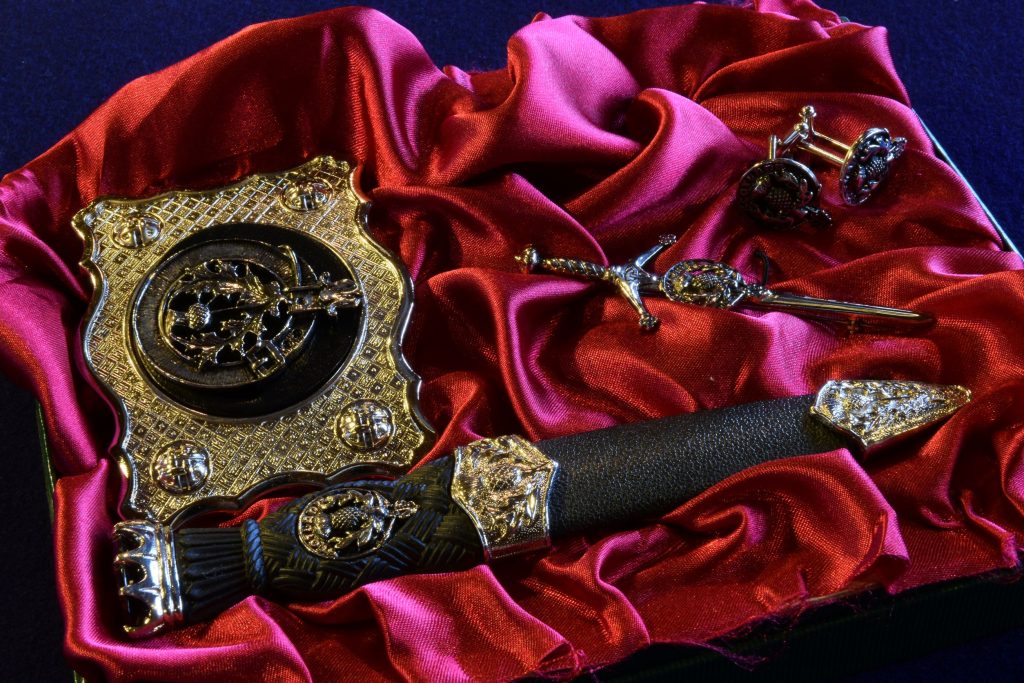
Clan crest items –
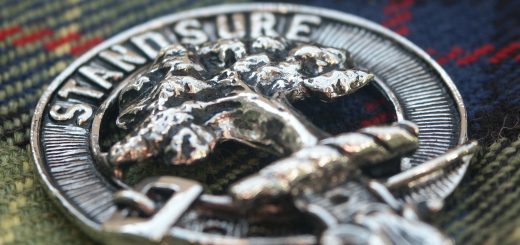
Clan crest items are often highland wear accessories like belt buckles, brooches, kilt pins , Sgian Dubhs, cufflinks, sporrans & flasks. clan crests are representative & symbolic to clans and often engraved or decorated into highland wear accessories this is a little extra detail that can make it seems more special and more traditional. this allows people to feel more connected to their scottish ancestry.
We offer gift sets & accessories packs that all match the desired clan crest of the name to add those extra special touches and are keep sakes of your special occasions.
Little scottish wedding traditions –
The beauty of scottish weddings is that they are all different, due to this many different wedding traditions have emerged over the years. The most common is definitely hand fasting as mentioned prior, this is seen as an act of unity and love connecting the couple with a tartan ribbon strip. Some couples even chose to do a wedding walk with wedding party to the venue followed by a bagpiper. A penny shower or also known as a wedding scramble is another common wedding tradition as the bride steps into her car, the father of the bride throws a handful of money change for the children to “scramble” to collect.
Grooms can opt to pin a piece of their family/ clan tartan onto their bride to demonstrate an act of acceptance and invitation into the grooms family/clan. Brides have previously put a “lucky” sixpence in their shoes as its seen to bring good luck. Other aspects of wedding traditions include incorporating scottish language into their wedding vows, scottish dancing & music, or bringing in pieces of thistle/heather into the décor & bouquets.
This older tradition called “creeling the bridegroom” involves the groom carrying a large basket (creel) filled with stones. He must carry it until his bride comes to kiss him, symbolizing her willingness to share his burdens.
Quaich’s-
A quaich is a metal shallow wide handled bowl also referred to as a loving cup as its an old scottish wedding tradition. The shallow bowl has two horizontal handles known as lugs were make it easier to be shared between two people. Usually these bowls will be engraved or decorated with Celtic patterns, symbols, gemstones or have clan crest detailing. Quaich’s can be personalized with engravings, such as the couple’s names, wedding date, or a meaningful message.
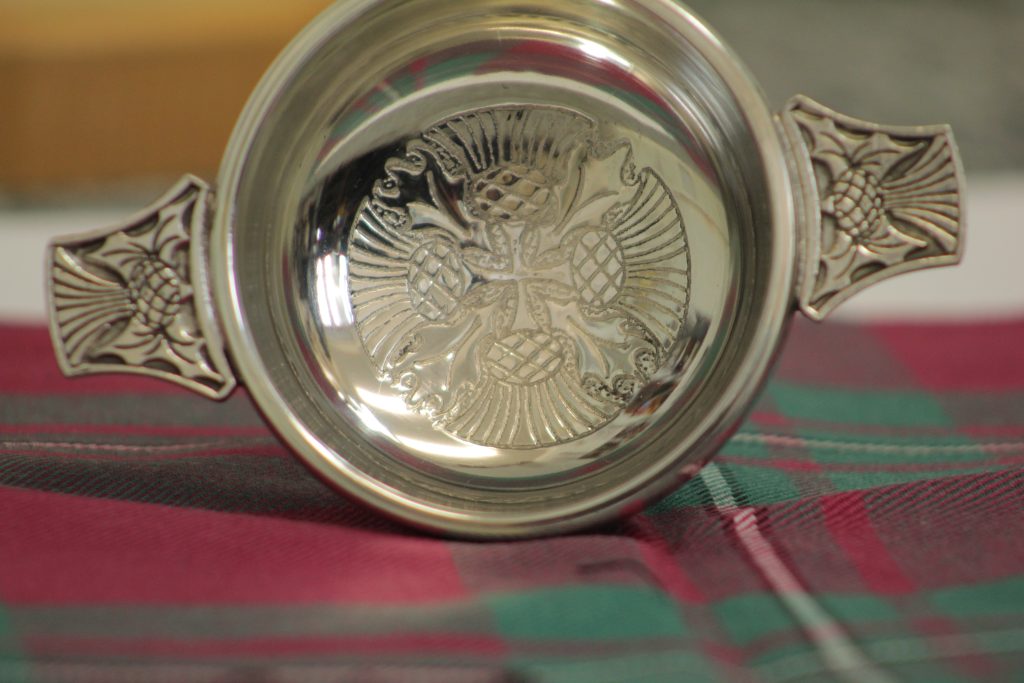
The word “quaich” comes from the Gaelic word “cuach,” meaning “cup.” The quaich has been used in Scotland for centuries, dating back to around the 16th century or earlier.
The quaich resembles trust and unity as couples drink from it simultaneously and celebrates their union, future & blending of families. Sometimes, the quaich is passed around to family members and guests, allowing everyone to partake in the tradition and offer their blessings to the couple.
The quaich remains a strong symbol of Scottish culture and heritage, representing the country’s tradition of warmth and hospitality.
Pipers & ceilidhs –
Pipers are almost a must have for a scottish wedding usually they play outside the venue as the guests & wedding party arrive but some couples to have their piper play during the reception and as they leave. Bagpipes are a very simple way of creating a more traditional scottish wedding.
Some wedding receptions turn into mini ceilidhs as the Scots know how to party & usually feature scottish folk music & dance. This can sometimes include having a more traditional scottish meal so some couples will opt for a more scottish cuisine focussed menu like like haggis, neeps, tatties, and shortbread, reflecting the country’s culinary heritage.
We hope this informational blog has been educational & interesting, you can find out more about highland wear & products on our website Kiltmakers.com.
For similar blogs you can read about other topics here. You can also browse wedding accessories here.
We would love to welcome you into our traditional highland wear store or you can also enquire to us at [email protected] or call us on 0141 889 4879.